






If a day tank is manufactured with an “emergency vent” port, that port must be plumbed to the outside of the building. The emergency vent line must be terminated with the type of cap, usually a pressure relief “pop-up” type, specified in the manufacturer’s installation manual.
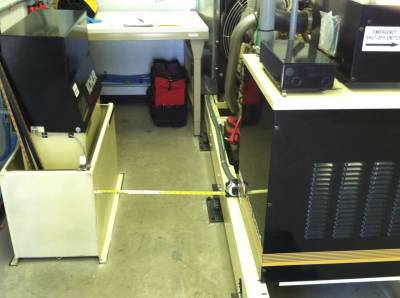 An intermediate fuel storage tank, known as a day tank, is required when there’s concern that the flow of fuel between the main fuel tank, usually an above ground storage tank (AST) in the NAS, and the engine generator (e/g) may not be reliable. One of the most common problems is that the main tank is positioned too far from the e/g for the e/g’s fuel pump to maintain the suction required for reliable fuel transfer from the main AST. The smaller intermediate day tank is positioned closer to the e/g to relieve the fuel pump of the long draw.
Day tanks come in many shapes and sizes. I have seen day tanks in the NAS with capacities ranging from ten gallons to hundreds of gallons of diesel fuel. Day tanks are usually housed in the same room as the e/g.
OSHA regulation 29 CFR §1910.106(b)(1)(iii) requires that fuel tanks storing flammable liquids under atmospheric pressure, which is the case with day tanks used in the NAS, be built in accordance with acceptable good standards of design. OSHA then goes on to say that this can be demonstrated by meeting one or more specified industry consensus standards. The standard that manufacturers most often use to meet this requirement is UL No. 142, Standard for Steel Aboveground Tanks for Combustible Liquids. UL standard No. 142 has been incorporated directly into OSHA’s federal regulations at 29 CFR §1910.6(w)(3). (See Origin of Electrical and Fire Protection Standards for background on UL standards.)
Additionally, National Fire Protection Association (NFPA) Standard 1, National Fire Code, requires fuel tanks to be designed, constructed and installed in accordance with NFPA Standard 30, Flammable and Combustible Liquids Code. NFPA 30 requires atmospheric tanks to be designed and constructed to meet industry consensus standards. One of those standards is UL 142.
For all practicable purposes, day tanks installed in the NAS must be listed by UL and have a label or plate affixed to it certifying that it meets UL No. 142.
If a day tank, listed under UL 142, is manufactured with an emergency vent, the emergency vent must be plumbed to the outside and the line capped in accordance with the manufacturer’s instructions. For some unknown reason, many day tanks installed around the NAS have the emergency vent port plugged or vented into the e/g room, instead of outdoors. Some emergency vents that have been plumbed to the outdoors have been terminated with the wrong type of cap. Manufacturers usually specify that some type of pressure relief “pop-up” cap be used to terminate the emergency vent. In any case, the manufacturer’s installation instructions must be consulted and adhered to strictly.
If a day tank is manufactured with a sole main vent port without a dedicated emergency vent port, it is acceptable for use in the NAS only if the tank has been labeled certified by UL as meeting UL standard No. 142
If you are aware of any day tank that isn’t properly vented, immediately report the unsafe condition with an Unsatisfactory Condition Report (UCR) via the Safety Management Information System (SMIS) so that the proper Hazard Abatement Plan can be put in place. The SMIS can be accessed from behind the agency’s intranet firewall at https://smis.faa.gov.
Don’t hesitate to contact your PASS Regional Safety Representative for assistance.